The Role of Nitrogen Gas in the Laser Cutting Industry and the Benefits of PSA-Type Nitrogen Generators for the Industry
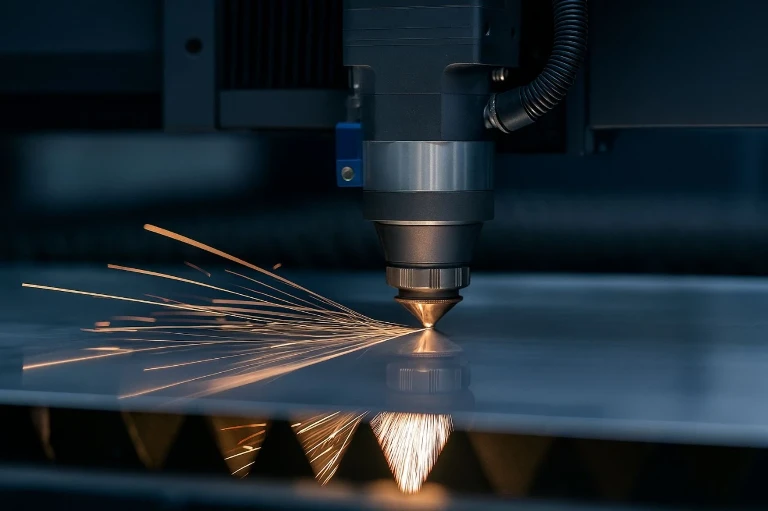
Laser cutting technology, one of the most important cornerstones of the metalworking industry, is gaining increasing importance and prominence in the modern manufacturing world. Laser cutting machines, which offer speed, flexibility, and high precision, are used in many sectors such as machinery manufacturing, automotive, home appliances, furniture, construction, and others.
In laser cutting operations, the auxiliary gases used in laser cutting machines (particularly nitrogen, oxygen, and mixed gases) directly affect both the quality and cost of the process. Nitrogen (N2), which plays a significant role among the auxiliary gases used in cutting, stands out for the quality advantages it provides, especially when cutting stainless steel, aluminum, copper, and other metals.
Businesses that perform laser cutting but do not have their own nitrogen generator systems typically source nitrogen gas in two different ways. They obtain it externally in the form of liquid nitrogen (bulk nitrogen) or high-pressure cylinder bundles (also known by various names such as “manifold” or “bundle”). However, due to advancing technology and cost pressures on laser cutting companies, the use of PSA-type nitrogen generators—which enable the on-site production or supply of nitrogen gas, one of the largest cost items, in a much more economical manner—is increasing day by day.
This article will examine in detail the role of nitrogen in laser cutting machines, as well as the benefits and advantages that PSA-type nitrogen generator systems can provide to the laser cutting industry.
The Importance of Assisting Gases in Laser Cutting Machines
The assisting gases used in laser cutting machines (CO₂ and Fiber) directly influence the effect of the laser beam on the workpiece. The type, purity, cleanliness, and pressure of the assisting gas directly affect cutting speed, edge quality, burr formation, and color changes along the cut edges.
OXYGEN
Used in carbon steel cutting. It provides a high-quality cut edge but causes the formation of an oxidized layer on the cut edges.
NITROGEN
In the laser cutting of stainless steel materials, the use of nitrogen gas prevents oxidation and discoloration issues on the cut surfaces. It is crucial that the nitrogen gas used for stainless steel cutting has a high purity level. The high-purity nitrogen gas produced by AIRON Industrial’s nitrogen generator systems guarantees a bright, burr-free, and color-consistent cut surface.
During the laser cutting of aluminum materials, the oxygen present in the environment causes the cut surface to oxidize and turn yellow. The use of nitrogen in aluminum cutting not only prevents this yellowing but also, thanks to nitrogen gas’s cooling properties, helps prevent the formation of burrs during the cutting process.
In the laser cutting of mild steel materials, particularly due to rising costs and increased operational pressure in recent years, carbon steel materials—which were previously cut with oxygen—are now being cut with nitrogen gas using high-kW fiber lasers. Cutting with nitrogen gas allows for cutting speeds that are 2-3 times higher than those achieved with oxygen, as well as a higher-quality cut surface. Nitrogen gas is now frequently preferred, particularly for carbon steel materials that will be painted afterward, as it prevents the formation of scale on the cut edges.
Problems Caused by Traditional Nitrogen Supply Methods in Laser Cutting Operations
In the laser cutting industry, nitrogen supply is typically provided via liquid nitrogen tanks or high-pressure cylinders. Both methods inherently have significant drawbacks:
High Cost: Whether using liquid nitrogen or high-pressure cylinder bundles, the cost of the supplied nitrogen gas will remain a major expense within your company’s total operating costs.Logistical Challenges: Delays or issues during tanker refilling or the transportation and delivery of high-pressure cylinder bundles can lead to production interruptions.
Storage Requirements: A large amount of space is required to store backup cylinder sets and tanks to prevent potential disruptions.
Losses: In liquid nitrogen applications, evaporation and the release of nitrogen in the gaseous phase from the tank into the atmosphere during filling, as well as the return of the portion remaining below the minimum operating pressure in pressurized cylinders, result in costs for businesses due to unusable nitrogen.
Safety Risks: High-pressure cylinders pose safety risks.
Carbon Footprint: The production and transportation of liquid nitrogen consume significant amounts of energy.
Advantages of Using PSA Nitrogen Generators in Laser Cutting Operations
The main advantages that PSA generators offer to the laser cutting industry are as follows:
On-Site Production: Nitrogen is produced on-site, eliminating external dependency.
Low Cost: Provides savings of up to 70%.
High Purity Control: Production is possible within a purity range of 99% to 99.9999%.
Uninterrupted Operation: 24/7 production is possible.
Modular Design: New modules can be added as capacity needs increase.
Safety: Risks associated with cylinders and tankers are eliminated.
Environmental Sustainability: The carbon footprint is reduced, and logistics requirements are eliminated.
If we calculate the amount of savings using a simple example:
At a laser cutting company consuming 30,000 m³ of nitrogen per month;
Liquid nitrogen cost: 14.00 ₺/m³, totaling 30,000 * 14.00 = 420,000.00 ₺/month = 5,040,000.00 ₺
AIRON PSA generator production cost (99.999% purity, 230 bar production and storage, including maintenance): 4.5 ₺/m³, totaling 30,000 * 4.5 = 135,000.00 ₺/month = 1,620,000.00 ₺/year
In the example where a company operating in the laser cutting sector switches to nitrogen production using a nitrogen generator system, the annual profit would be approximately 3,420,000.00 ₺. This transition makes the economical use of nitrogen gas possible.
CONCLUSION
The global increase in production, coupled with strategies focused on energy efficiency and sustainability, has made the use and conversion of nitrogen generators even more essential. For this reason, AIRON PSA nitrogen generators assist companies operating in the laser cutting sector by providing significant advantages in areas such as cost and environmental sustainability, thereby enhancing their competitive edge.
The evolving technology of laser cutting machines is one of the cornerstones of quality and efficiency in today’s manufacturing world. The true potential of this technology can only be realized through the use of correct cutting parameters and the right auxiliary gas.
Nitrogen gas is an indispensable auxiliary gas in laser cutting because it prevents oxidation, ensures bright and clean edges, and reduces burr formation. However, relying on external supply (via cylinders or liquid nitrogen) results in high costs and logistical dependencies.
AIRON PSA-type nitrogen generators offer revolutionary benefits to the laser cutting industry:
Up to 70% lower nitrogen costs
24/7 uninterrupted production capability
Flexible production capacity tailored to varying demand
High quality up to 99.9999%
A much safer and more environmentally friendly solution compared to external supply methods
Investing in a nitrogen generator today will provide businesses not only with cost advantages but also long-term competitive strength.