PSA-Type Nitrogen and Oxygen Generators: The Evolution of PSA Technology, Operating Principles, and Benefits
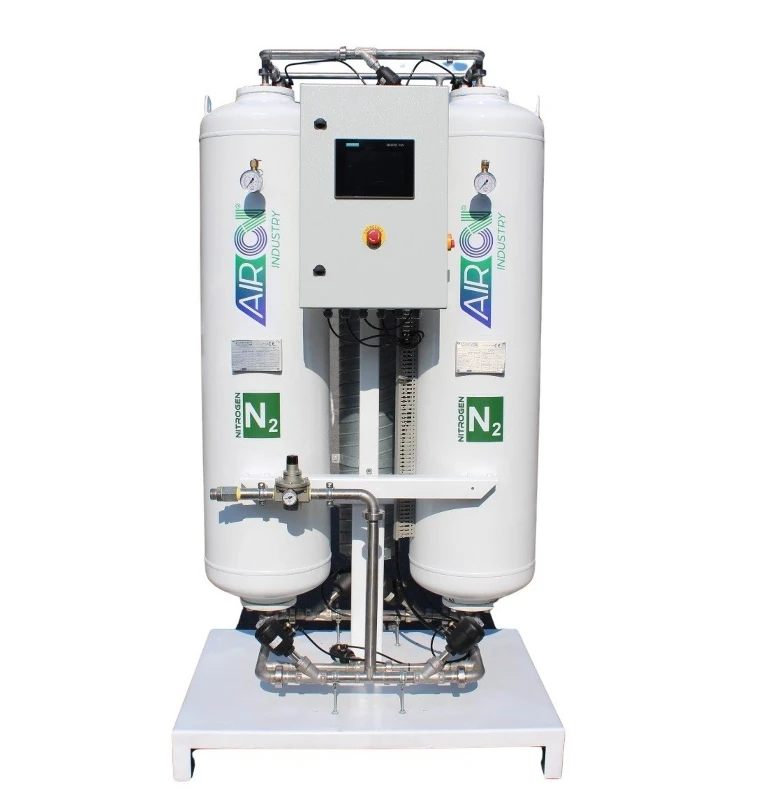
Nitrogen and oxygen are among the most commonly used gases in industry. Pressure Swing Adsorption (PSA) technology is one of the most important and cost-effective production systems for these gases in industrial applications.
In the process of separating gases such as nitrogen and oxygen from air, PSA gas generator systems offer significant advantages to businesses in terms of both energy efficiency and operational continuity. Airon Endüstri is one of the leading companies in Turkey producing this technology with high engineering quality.
A Brief History of PSA-Type Gas Generators
PSA (Pressure Swing Adsorption) technology was first developed in the 1960s for the separation of nitrogen and oxygen gases from air. The first gas generators using this technology were produced in the United States in the 1960s. The gas generators produced during those years were primarily small in capacity and scale. Their applications were mainly limited to laboratories and similar settings.
In subsequent years, particularly starting in the 1980s, with the development of high-efficiency zeolite and carbon molecular sieve (CMS) materials, PSA systems became suitable for use and production on a scale capable of serving industries requiring higher capacity and purity.
After the 2000s, PSA-type nitrogen and oxygen generators began to replace traditional cylinder and liquid gas supply methods due to their energy efficiency and ease of maintenance.
Airon Endüstri, one of the leading manufacturers in this field in Turkey, combines PSA technology with local engineering expertise at its 5,000 m² facility in Istanbul and over 10 years of experience to provide customized gas generator system solutions for the chemical, food, pharmaceutical, metal processing, electronics, and many other industries.
Operating Principle of PSA Gas Generators
The basic operating principle of PSA oxygen and nitrogen generator systems is based on the selective retention of specific gas molecules (nitrogen in oxygen generators, oxygen in nitrogen generators) by adsorbent materials. This separation is achieved by exploiting the difference in molecular size.
While the kinetic diameter of an oxygen (O₂) molecule is 0.346 nm, that of a nitrogen (N₂) molecule is 0.364 nm. Thanks to this size difference, CMS and Zeolite are able to perform the separation processes to produce gas at the desired purity and volume.
In these systems, air from the compressor first passes through gas-type dryer filters and an activated carbon column, where it is purified of moisture, dust, and oil, and then directed to the first column. Here, the carbon molecular sieve (CMS) retains oxygen during nitrogen production; during oxygen production, zeolite-based materials retain nitrogen. Meanwhile, the second tower is in the regeneration and pressure reduction (desorption) phase. The system continues in this manner until the absorbent in the first tower becomes saturated and requires regeneration. When the first tower becomes saturated, it enters the regeneration and pressure reduction phase, while the second tower switches to the pressurization phase and continues gas production. The two pressurized towers operate alternately. The system is designed with two towers to enable uninterrupted and continuous gas production. Thanks to this design, PSA-type gas generators ensure uninterrupted production.
Technical Details
PSA generators essentially operate on a four-stage cycle:
1. Adsorption under pressure
2. Pressure equalization
3. Pressure reduction (desorption)
4. Re-pressurization
The system’s efficiency depends on variables such as the air-to-gas ratio, tower internal temperature, inlet/outlet pressure difference, valve transition times, and the pore structure of the adsorbent material. In systems developed by Airon Endüstri, tower transition losses are minimized thanks to special stainless steel Bürkert valves and synchronization algorithms/software.
Table 1: Technical Specifications of PSA-Type Nitrogen and Oxygen Generators
Advantages of PSA Technology
Continuous and uninterrupted production
Low operating costs
High energy efficiency
Minimal maintenance requirements
Environmentally friendly production
Simple automation and user-friendly control panel
Short payback period
An Economic Comparison of PSA and Liquid/Cylinder Gas Use
Comment: PSA gas generation systems offer the lowest total cost of ownership (TCO) in the long term with moderate upfront investment costs.
Energy Efficiency and Return on Investment
PSA systems are 40–60% more energy-efficient than cryogenic systems. The low air-to-gas ratio designs used in systems manufactured by Airon Industry reduce energy consumption to as low as 0.25 kWh per unit of gas. For example, a facility with a monthly nitrogen consumption of 15,000 m³ (4 bundles per day / 12 units) can save approximately €70,000 per year with a PSA system.
Table 2:
Sample Return on Investment Calculation for a Nitrogen Generator System with 99.999% Purity
Conclusion on PSA-Type Gas Generator Systems
PSA-type nitrogen and oxygen generators offer businesses the ability to produce gas independently, in an environmentally friendly, flexible, and cost-effective manner. Airon Industry’s engineering-focused designs, combined with low energy consumption, an optimized air ratio, and a long-lasting adsorbent structure, set its gas generators apart in the industry. These systems are not merely auxiliary production systems; they are one of the cornerstones of a sustainable and economical production philosophy.