The Role of Nitrogen Gas in the Heat Treatment Industry and the Benefits of PSA-Type Nitrogen Generators for the Industry
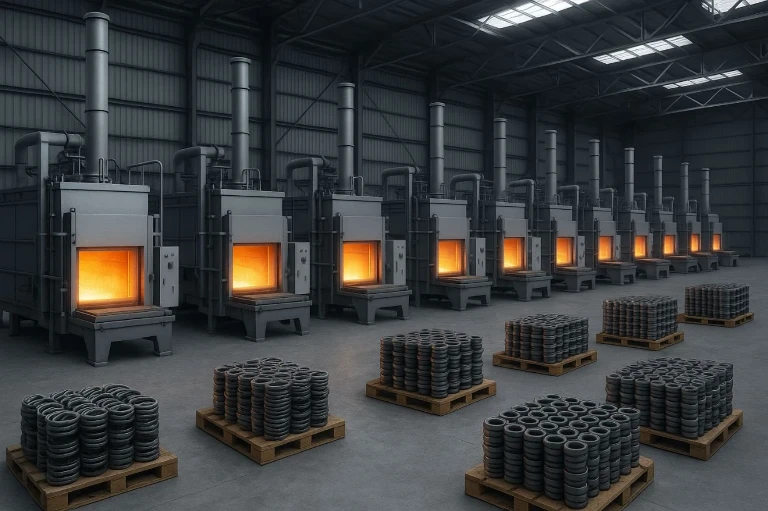
The heat treatment industry is a critical manufacturing sector used to increase the surface hardness of metals and alloys, improve their mechanical properties, enhance wear resistance, and extend the service life of materials. The atmospheric gases used in this process play a decisive role in determining the quality of the treated products.
Among these gases, nitrogen (N₂) is frequently used in industrial heat treatment applications due to its inert nature, cost-effectiveness, and reliability. However, companies often benefit from these advantages only to a limited extent because they remain dependent on external suppliers for industrial gases. At this point, PSA-type nitrogen generator systems enable the on-site production of nitrogen at the required high purity levels and variable flow rates, offering significant cost savings to businesses through low production costs.
The Role of Nitrogen Gas in Heat Treatment
The atmosphere gases used in heat treatment furnaces directly affect the surface properties of the materials undergoing heat treatment. Here, nitrogen gas is generally preferred as the carrier atmosphere gas.
Carrier gas: Nitrogen gas typically serves as the carrier gas in processes such as carburizing, nitriding, and carbonitriding
Inert gas: Due to its inert nature, nitrogen prevents oxidation by not reacting with the material or in flammable gas mixtures
Protective atmosphere: It prevents the formation of an oxide layer on the surface of parts during heat treatment, thereby preserving the surface quality of the product.
The Use of Nitrogen in Heat Treatment Processes
Nitrogen plays a critical role in many types of heat treatment processes, such as carburizing, nitriding, carbonitriding, annealing, and sintering.
Carburizing: Nitrogen is used in conjunction with carbon-carrying gases to keep oxygen out of the environment.
Nitriding: As ammonia decomposes, nitrogen gas creates an inert atmosphere, ensuring a controlled process.
Carbonitriding: Nitrogen is used to remove oxygen gas and maintain a controlled atmosphere.
Annealing: In the atmospheres used to eliminate brittleness in the metal during the process, nitrogen serves as a protective atmosphere.
Sintering: It prevents oxidation at the high temperatures encountered in powder metallurgy.
Benefits of Nitrogen in Heat Treatment
Surface Quality: By preventing oxidation during heat treatment operations, it ensures a clean and bright surface.
Cost Advantage: Nitrogen gas is significantly less expensive than more costly inert gases such as argon, yet it delivers comparable results.
Controlled Atmosphere: The pressure and composition of the atmosphere inside the furnace are precisely controlled.
Safety: Since nitrogen gas is non-flammable and even has a suppressing effect against combustion and explosions, its use is preferred for workplace safety.
Environmentally Friendly: The use of nitrogen gas in heat treatment does not result in the formation of chemically harmful byproducts.
Problems Caused by Traditional Nitrogen Supply Methods in Heat Treatment Operations
In the heat treatment industry, nitrogen is typically supplied using liquid nitrogen tanks or high-pressure cylinders.
Both methods inherently have significant drawbacks:
High Cost: Whether using liquid nitrogen or high-pressure cylinder bundles, the cost of the supplied nitrogen gas will remain a major expense in your company’s total operating costs.
Logistical Challenges: Delays or issues during tanker refueling or the shipment and delivery of high-pressure cylinder bundles can lead to production interruptions.
Storage Requirements: A large amount of space is required to store backup cylinder sets and tanks to prevent potential disruptions.
Losses: In liquid nitrogen applications, evaporation and the release of nitrogen in the gaseous phase from the tank into the atmosphere during filling, as well as the return of the portion remaining below the minimum operating pressure in pressurized cylinders, result in costs for nitrogen that cannot be utilized by the business.
Safety Risks: High-pressure cylinders pose safety risks.
Carbon Footprint: The production and transportation of liquid nitrogen consume significant amounts of energy.
Advantages of Using PSA Nitrogen Generators in Heat Treatment Operations
The main advantages that PSA generators offer to the thermal processing industry are as follows:
On-Site Production: Nitrogen is produced within the facility, eliminating external dependency.
Low Cost: Achieves savings of up to 75%.
High Purity Control: Production is possible within a purity range of 99% to 99.999%.
Uninterrupted Operation: 24/7 production is possible.
Modular Design: New modules can be added as capacity needs increase.
Safety: Risks associated with cylinders and tankers are eliminated.
Environmental Sustainability: The carbon footprint is reduced, and logistics requirements are eliminated.
T
https://aironindustry.com/iletisim
CONCLUSION
The growth in global production, coupled with strategies focused on energy efficiency and sustainability, has made the use and conversion of nitrogen generators increasingly essential. For this reason, AIRON PSA nitrogen generators help companies operating in the heat treatment sector enhance their competitive edge by providing significant advantages in areas such as cost and environmental sustainability.